
After years of being overly dependent on traditional partners, Canada is forging new relationships, both internally and externally to produce innovative partnerships that are driving the future of auto manufacturing.
By Kirk Mathieson
A lot has changed since the first Model T rolled off Henry Ford’s Detroit-based assembly line back in 1908, introducing an iconic vehicle that forever altered North America’s automotive and manufacturing landscapes and put affordable transportation within reach for millions of American drivers. The “Tin Lizzy” ceased production in 1927 to make way for more advanced models, but its impact continued to be felt throughout the 20th century and helped lay the foundations for the modern era.
Fast forward to 2026, where we confront a world with artificial intelligence, self-driving vehicles and a rapidly changing global economy. As Canada continues to make the transition to electric mobility, strategic partnerships will continue to play a key role in the move towards a greener future. New technology brings new challenges along with new opportunities.
Here’s some positive news from the front lines.
Cleaner motors get boost from industry leader
One issue related to EV design is finding ways to reduce their overall carbon footprint by using safer materials. A company from Hamilton has taken the lead on this approach by developing a switched reluctance motor (SRM) that is magnet-free. In October 2025, they received a grant from the Honda corporation through its global open innovation program, Honda Xcelerator Ventures.
According to Manabu Ozawa, Honda’s Managing Executive Officer, “Enedym has an innovative switched reluctance motor technology that does not require any rare earth materials. Most electric propulsion motors today use permanent magnets made from rare earth metals, which are expensive and environmentally challenging. Enedym motors do not use any permanent magnets, and Honda has high hopes for its potential.”
Research and development into new technologies is expected to accelerate as EVs become more popular and more charging stations are built to meet consumer demand for clean transportation.
“At Enedym, we have redefined what swtiched reluctance motors can do. Through proprietary motor configurations, cutting edge control strategies, and comprehensive design optimization, we have overcome the traditional limitations of SRMs,” Dr. Ali Emadi, the founder and president of Enedym, said in a recent press release. “We are very pleased that Honda sees the potential of our motor technology. We are excited to deepen our partnership with Honda and welcome them as our strategic investor.”
Canadian battery recycling program to expand thanks to new partnership
The average ICE passenger vehicle emits between 10-and-20 kilograms of CO2 per 100 km, or about 4.5 metric tonnes per year. Multiplied over millions of vehicles, this becomes a much bigger number – and problem.
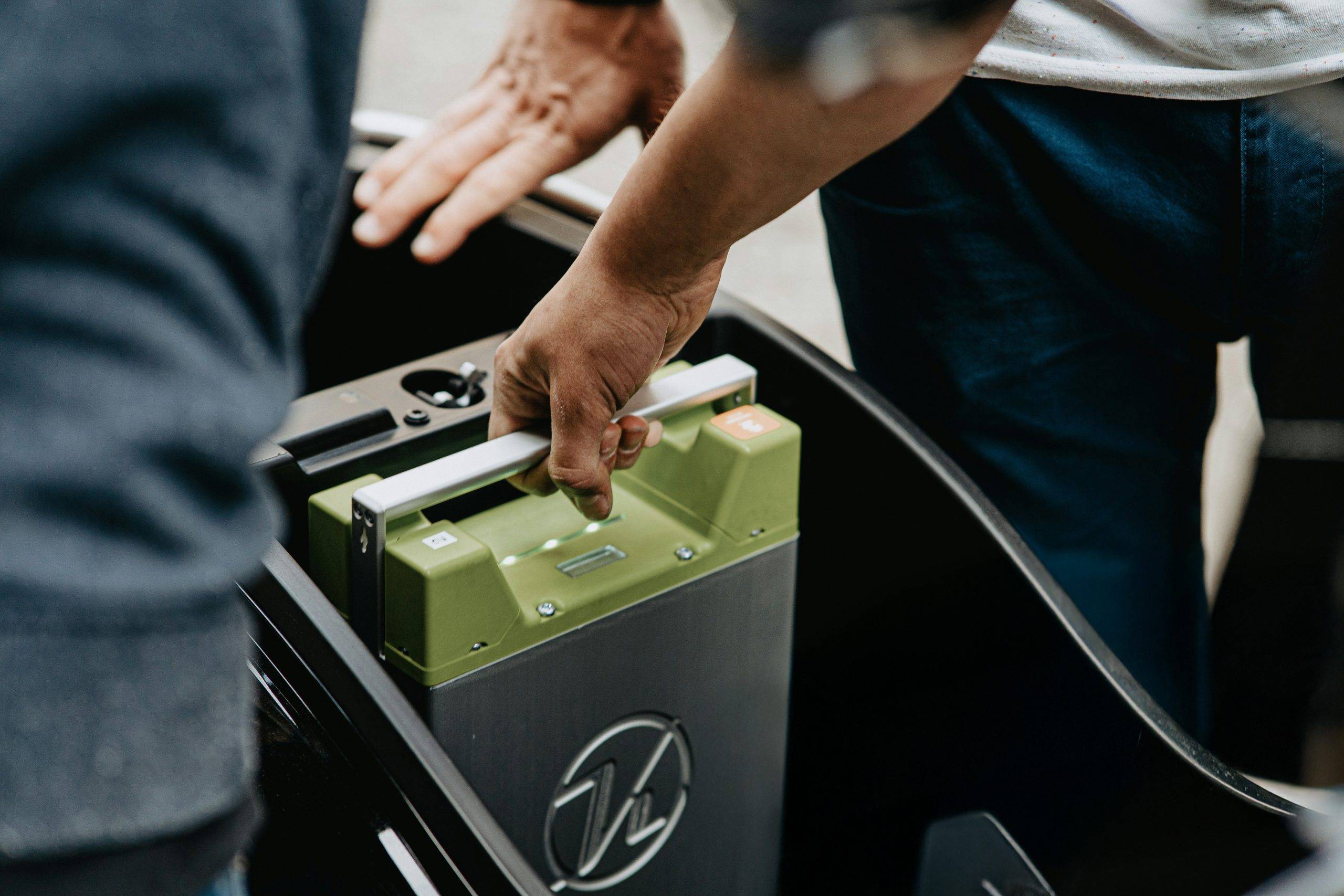
The advantage of EVs is their potential to eliminate fossil fuel reliance in the auto sector; however, their life cycle impact poses its own set of challenges. The main component of an EV – a lithium-ion battery weighing up to 500 kg – requires excavating minerals like manganese and cobalt using energy-heavy processes that are harmful to the environment. Moreover, despite rigorous policies around recycling that exist in most areas, some battery components still end up in landfills.
A Canadian tech innovation firm wants to change that. Lithion Technologies Inc., a Montreal- based company specializing in battery recycling, recently signed a deal with Nissan to expand their efforts to recover critical minerals from end-of-life EV batteries. Lithion’s hydrometallurgical recycling process enables the recovery of up to 95% of battery materials and 98% of critical minerals, allowing these materials to be reused and potentially reducing dependence on costly resource extraction.
Lithion’s new plant located in Saint-Bruno-de-Montarville, Que., currently processes up to 10,000 tonnes of batteries per year, a figure that’s expected to double when the facility is running at full capacity in 2026.
“We are thrilled to team with Nissan and to support its vision on circularity of strategic and critical minerals from EVs,” said Yves Noël, Vice President and Chief Business Development Officer at Lithion Technologies Inc. “The strategic partnership with Nissan Canada and its dealer network is another great example of collaborations needed to realize the quest for clean, safe and efficient circularity of EV batteries.”
In an industry where tariffs and knee-jerk responses seem to rule these days, unpredictability has become the new normal. The good news is that it has enabled Canadian companies, overly-dependent on our neighbours to the south for far too long, to forge new partnerships and to reassess how business is done. And it appears that these new partnerships will be the key driver as we enter a new year and new beginnings.
————————–
Sources:
Model T: https://en.wikipedia.org/wiki/Ford_Model_T
Emissions: https://www.epa.gov/greenvehicles/greenhouse-gas-emissions-typical-passenger-vehicle
Battery: https://en.wikipedia.org/wiki/Electric_vehicle_battery
Enedym Grant: https://enedym.com/enedym-inc-secures-investment-from-honda-motor-co-ltd/
Recycling program: https://electricautonomy.ca/ev-supply-chain/recycling/2025-06-28/ev-battery-recovery-program-goes-nationwide/
https://canada.nissannews.com/en-CA/releases/nissan-canada-inc-and-lithion-technologies-to-advance-ev-battery-recycling-and-circular-economy-through-new-partnership#